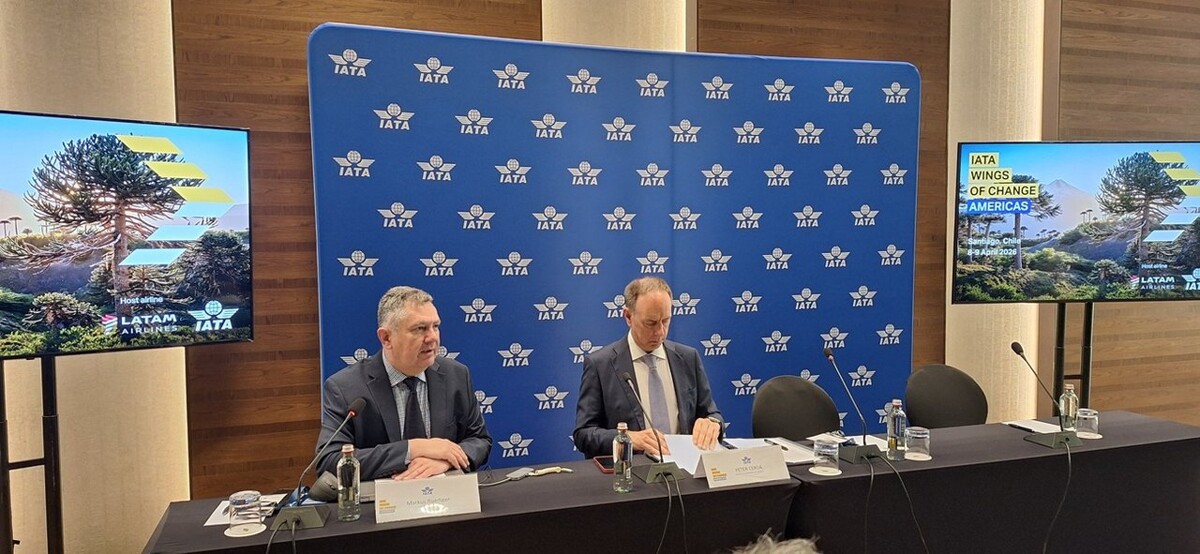
Vice President of the International Air Transport Association (IATA), Peter Cerda, held Argentina up as an example to other countries in the region in commercial aviation. "I would like Chile, Peru, and Brazil to copy what has been done in Argentina recently. We are seeing an example of how eliminating barriers and red tape boosts the sector," Cerda said at a press conference during the first day of the Wings of Changes event, organized by IATA and being held in Santiago, Chile. He added that it was previously said that Aerolíneas Argentinas needed protection or it would go bankrupt, but today the company is posting record figures, increasing its capacity, and receiving new aircraft while competing on equal terms with JetSmart and Flybondi. Cerda emphasized that Aerolíneas Argentinas is an example of healthy competition where the government does not interfere but allows the market to function transparently. However, he pointed to the issue of cost: "Argentina is an expensive country with a very high VAT. The closure or reduction of the runway affects wide-body aircraft, which are essential for international routes connecting Buenos Aires with Europe and North America." Cerda noted that in other countries, technical discussions about runway closures often begin with little notice, which is insufficient for an industry that plans its schedules a year in advance. In Argentina's case, by initiating talks early, the consequences were minimized. IATA has urged Argentine authorities to optimize the use of existing facilities and find solutions that do not involve mass flight cancellations, especially during the peak season. The IATA vice president warned that 54% of flights in the region operate in congested airports. "If we want this success to be sustainable and to reach 14 or 20 million tourists, the government must maintain this leadership and ensure that the regulatory framework does not penalize growth," he added. He also stated that the reassignment of flights from Canada, China, and Europe to Latin America is strengthening regional connectivity at a faster pace than anticipated two years ago. To capitalize on this, IATA insists that governments must view aviation as a strategic engine and not a luxury subject to excessive taxes.